You've holidayed here for years and now you're thinking of retiring here. The sea, the mild climate and the slower pace are a big draw. But spending a few weeks on holiday is one thing; living in the same home for most of the year is another.
Choosing a retirement home is not the same as choosing a holiday home.
In ten years' time, the stairs, the walk to the shops, the trip to the doctor and the grandchildren's visits should all still be easy. In this guide we briefly cover residency and budget, then go step by step through choosing a home and daily life for anyone thinking of retiring in North Cyprus. We want to give you a realistic picture and help you decide based on the years ahead, not just today. A relaxed pace of life, a mild climate and a relatively low cost of living are among the reasons many retirees, especially from the UK and Europe, choose North Cyprus.
What Do You Need to Retire in North Cyprus?
In short: a residence permit for living here long term, and a budget that matches your income. We cover both in detail elsewhere, so here are the points that matter most for retirees.
Residency
Property-based residence permit: under the rules published in Official Gazette No. 193 on 2 October 2026, if the property registered in your name is worth £300,000 or more in total, a 10-year residence permit is available; below that, a 5-year permit. In both cases no proof of income is required.
The details: conditions, documents and the application process are in our North Cyprus residency by property guide. Confirm the current rules with the official authorities before you apply.
Budget and income
Income in pounds or euros: if your pension or savings are in sterling or euros, paying most everyday costs in Turkish lira can work in your favour.
Watch the property prices: homes and rents are mostly priced in sterling, so plan your budget around that.
Total cost: buying taxes and fees are explained in our property purchase taxes guide.
Payment plans: prices and contracts are in pounds sterling. For eligible homes, 35% of the price can be paid as a down payment, with the rest paid directly to Döveç Group during construction, interest-free and without a bank loan. See our interest-free property guide for details.
What Should You Look for in a Retirement Home?
With a holiday home, the view and the beach come first. With a retirement home, the real question is: will this home still make life easier as I get older?
Accessibility: is there a lift? Is the flat on one level, or a duplex with internal stairs? How many steps are there at the entrance, the car park and the shared areas?
Low maintenance: a large garden and private pool are lovely but need constant upkeep. Will you do it yourself or pay a service?
Professional management: security, upkeep of shared areas and someone to call when something breaks are reassuring, especially if you'll live alone or as a couple.
Everyday amenities: how many minutes to the supermarket, pharmacy and medical care? Would those distances still work on a day you no longer drive?
Airport access: for visits from children and grandchildren, the distance to Ercan Airport matters.
A guest room: if family will visit regularly, a second bedroom often makes all the difference.
Year-round comfort: heating, insulation and damp matter as much as the summer view if you'll spend winters here. Our North Cyprus in winter guide covers this in detail.
Apartment or villa?
There's no single right answer. An apartment in a managed development with a lift makes upkeep and security easier. A villa offers a garden and privacy but needs more maintenance. Our guide to apartment or villa in North Cyprus compares the two.
Our projects include options for different retirement needs:
Vertical residence living: Querencia at İskele Long Beach is a good example of living with lifts and professional management. It's about 400 metres from the beach, around 15 minutes from Famagusta city centre and around 50 minutes from Ercan Airport.
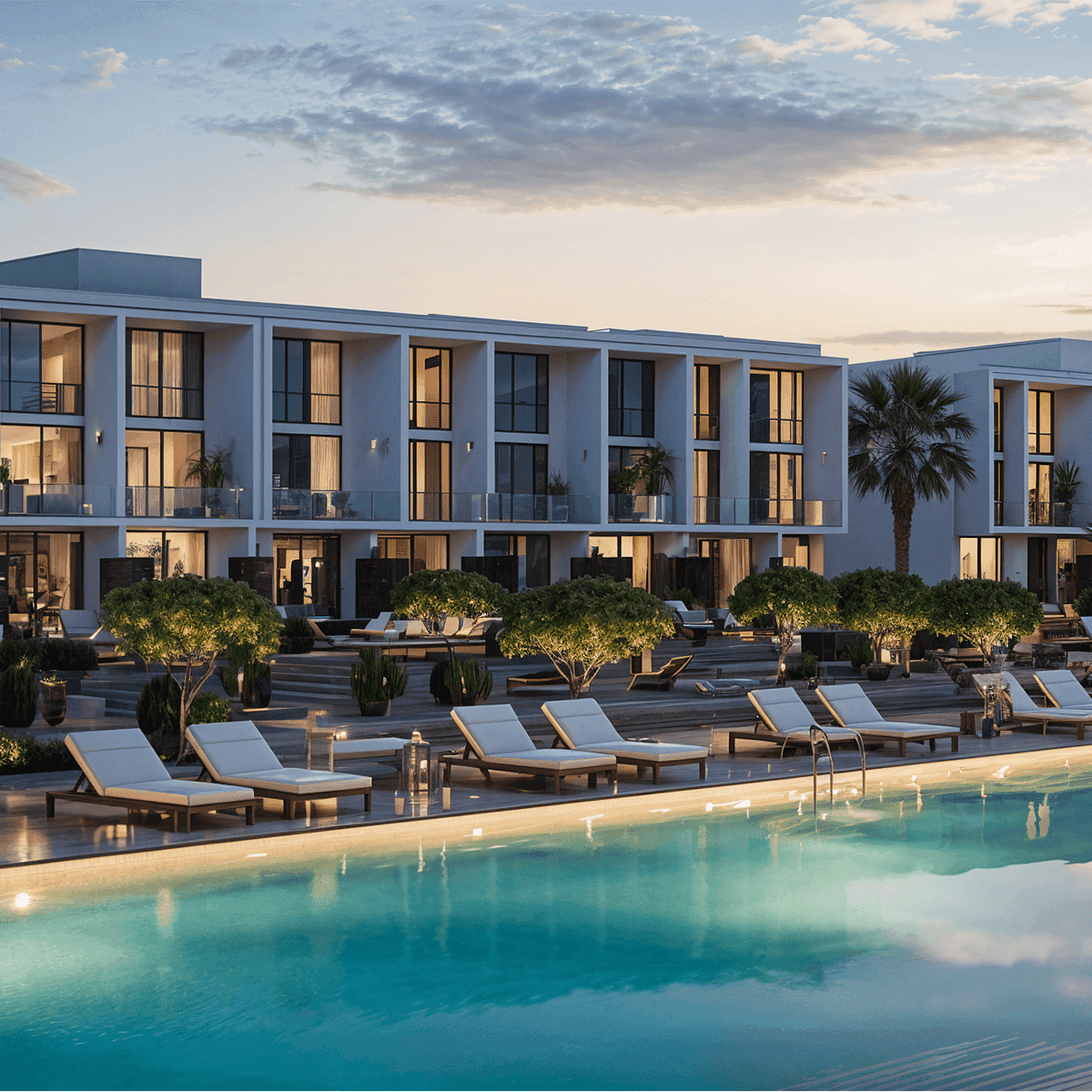
Low-rise, horizontal living: Courtyard Platinum in Boğaz offers a calmer, closer-to-the-ground lifestyle with several pools and shared spaces. Completion is due in December 2026, and you can visit Courtyard Long Beach, completed in 2021 on the same concept, to see the lifestyle first-hand.
Everyday needs on your doorstep: D-Point at Long Beach combines homes and commercial space. Its pool, sports areas, security and rental management can be handy for retirees who spend part of the year with family abroad. Completion is due in December 2028, so factor that in if you plan to move soon.
A garden close to the sea: Natulux in Tatlısu offers seafront apartments and villas, with completion due in May 2027.
Managing the home from abroad
If you'll spend part of the year with family back home, plan who will look after the property while you're away. Our guide to what makes a property easy to manage from abroad can help.
What Is Daily Life Like for Retirees?
Where will I see a doctor? Will I make friends? Will I get bored in winter? These are the questions retirees ask most.
Healthcare
North Cyprus has both state and private healthcare; private hospitals generally have specialists trained abroad and offer services in English. Healthcare is still one of the most important factors in the decision, so when viewing homes, find out how many minutes it takes to reach the nearest hospital and pharmacy.
Emergencies: the emergency number in North Cyprus is 112. Keep it, and the address of your nearest hospital, somewhere visible at home.
Regular check-ups: getting to know a doctor and hospital early makes things easier when you need them.
Medication: before you move, check whether your regular medicines are available here and how prescriptions work.
Insurance: confirm in writing what your health insurance covers in North Cyprus, whether there's an age limit and how renewal works.
Getting around
On the coast, a car is usually the practical choice for everyday errands. North Cyprus drives on the left, which will feel familiar to UK drivers. If you're thinking of giving up driving, a home closer to a town centre gives you more independence.
Social life
Daily life in North Cyprus is largely lived outdoors. The island's international residents have active social networks, and Kyrenia in particular is known for its long-established British and European community. On-site social spaces and events also make it easier to build a new circle. Another factor in your social life is how many homes in your development are occupied in winter, so ask about this when viewing.
Retiring in a new country is exciting, and settling into a new circle takes a little time. The quickest way through it is not to leave your social life to chance: join events at your development, sign up for a club or course, and get to know other retirees nearby.
If you can, stay in the area for a few weeks before you move, ideally in winter. That way you'll see whether this life suits you once the holiday feeling has gone.
What Is the Weather Like in North Cyprus? The Climate Season by Season
North Cyprus has a Mediterranean climate: long, dry summers and mild winters. The island is known for more than 300 sunny days a year, but for retirement what matters is how each season feels day to day.
Winter (December–February): January is the coolest month on the north coast, with average daytime temperatures around 16°C (61°F) and nights around 7°C (45°F). Most of the year's rain falls in December and January. Snow isn't part of daily life except on the higher peaks of the Kyrenia (Beşparmak) Mountains.
Spring (March–May): from March the weather turns much drier. With the countryside at its greenest, it's a lovely time for walks and day trips.
Summer (June–September): long, dry and hot. Air conditioning, a shaded balcony and a routine built around the cooler hours keep this season comfortable.
Autumn (October–November): the summer heat eases, and it's a comfortable time for the sea and the outdoors.
The sea: the water cools to around 16°C (61°F) in mid-February, while seafront promenades can be enjoyed all year.
For anyone coming from the UK or northern Europe, that makes for a very mild winter. Heating, insulation and damp, which shape winter life at home, are covered in our North Cyprus in winter guide. Figures are long-term averages and vary from year to year.
What Does a Day in Retirement Look Like in North Cyprus?
Most people who retire here talk about a change of pace. A morning walk along the beach or around the development, then a coffee and the day's shopping in town. A swim, a book or a hobby in the afternoon, and dinner with friends in the evening.
It isn't the same for everyone. But whether retirement here is enjoyable depends largely on having things to fill your days and people to share them with.
Staying active
Walking and the sea: the mild climate makes it easy to spend time outdoors for most of the year. Beach walks and swimming become a daily habit for many retirees.
On-site facilities: in a development with a pool, gym and social spaces, you can stay active without going far.
A new hobby: gardening, photography, painting or Turkish lessons fill the day and are an easy way to meet people.
Volunteering: joining associations and volunteering builds a real sense of belonging.
Places to explore
North Cyprus is small, which makes day trips easy. The ancient city of Salamis near Famagusta, Kyrenia harbour and Bellapais Abbey, or the quiet bays of the Karpaz Peninsula are just a few places you can enjoy on a quiet weekday. Weekly local markets are a good way to buy fresh produce and get to know local life.
Staying close to family
The hardest part of retiring abroad is often being far from children and grandchildren. To make it easier:
Keep a guest room: a comfortable room for family makes visits longer and more frequent.
Plan around school holidays: grandchildren's school holidays are the easiest times to get everyone together.
Factor in flights: travel time to Ercan Airport and connecting flights decide how often family can visit.
Living between two countries: some retirees spend part of the year with family back home. If you do, it matters that the property is easy to look after while it's empty.
With its mild climate, slower pace and residence permits linked to home ownership, North Cyprus is an attractive option for many retirees.
The real question isn't "can I retire here?" but "will this home still meet my needs in ten years?" When you decide, look at accessibility, healthcare and everyday convenience before the view.
Frequently Asked Questions
Do I need a residence permit to retire in North Cyprus?
Yes, to stay long term. Property owners can apply for a 5- or 10-year residence permit depending on the value of their property.
Do I need to prove my income to get residency through property?
As of 2026, no proof of income is required for a property-based residence permit. Confirm the current rules with the official authorities before you apply.
Is North Cyprus affordable on a UK pension?
For many people with a pension in sterling, everyday costs paid in Turkish lira can help. Property and rents are mostly priced in sterling, so budget for those carefully.
Is an apartment or a villa better for retirees?
There's no single answer. A managed apartment with a lift makes upkeep easier; a villa offers a garden and privacy but needs more maintenance.
Which area of North Cyprus is best for retirement?
Coastal areas such as İskele suit a quieter seaside life, while town centres suit those who want hospitals and shops within walking distance. Either way, check the distance to medical care and the airport.
What is winter like in North Cyprus?
Winters are mild: in January, daytime temperatures average around 16°C and nights around 7°C, with most rain falling in December and January. Check the home's heating and insulation, and visit in winter if you can.
How do retirees spend their time in North Cyprus?
Many start the day with a walk or a swim, and fill their time with courses, volunteering, events at their development and day trips. Enjoying life here depends largely on building a social circle.
What should I do before moving here to retire?
If you can, stay in the area for a few weeks in winter too, sort out your health insurance and medication, and find your nearest hospital. Confirm the residence permit rules with the official authorities before you apply.
Please note: this article is general information, not legal or financial advice. Residence permit rules and fees can change; refer to the TRNC authorities and the Official Gazette for current rules. This article was prepared and reviewed by Döveç specialists.
Your dream home in North Cyprus is waiting for you.